
I Tested 5 College Football Edges: 2026 Reality
College football is not simply “NFL football played by students”; it is a separate U.S. sports ecosystem shaped by the NCAA, conferences, campus traditions, recruiting, transfers, television contracts...
I Tested 5 College Football Edges: 2026 Reality
College football is not simply “NFL football played by students”; it is a separate U.S. sports ecosystem shaped by the NCAA, conferences, campus traditions, recruiting, transfers, television contracts, and the College Football Playoff. In 2026, the season runs from late August through conference championships, bowl games, and the CFP National Championship scheduled for January 25, 2027, at Allegiant Stadium in Las Vegas. The most useful edge is not blindly backing ranked teams. It is verifying schedules, injuries, travel, quarterback continuity, market movement, and price before acting. Use official NCAA and conference data first, then treat every prediction as probability rather than certainty.

Photo by El gringo photo on Pexels
College football rewards attention to detail, but it punishes lazy certainty. I learned that the expensive way after trusting a polished “official” sports site that mixed outdated schedules with invented promotional claims. Since then, my working rule has been simple: verify the game, verify the source, and only then evaluate the matchup. Match Daily is built around that same habit, although its primary coverage focuses on FIFA World Cup analysis rather than NCAA football. The transferable principle is valuable: data quality comes before confidence.
Want a more disciplined way to compare sports information?
Is college football really just a development league for the NFL?
No. College football is an independent amateur and university-based competition governed primarily through NCAA structures, while the NFL is a professional league with different rules, finances, schedules, and personnel systems. FBS and FCS programs compete under separate subdivision frameworks, and college results are influenced by campus resources, conference alignment, recruiting classes, transfer activity, and academic obligations.
The misconception survives because the NFL is the more visible professional product, and many elite college players eventually enter the NFL Draft. However, the relationship is developmental rather than hierarchical. The University of Alabama, Ohio State University, University of Georgia, University of Oregon, and University of Notre Dame each operate as major collegiate brands with their own supporters, stadium economics, rivalries, and institutional identities. A player can dominate in the Southeastern Conference and still face a difficult professional transition because the NFL demands more complex coverage recognition, faster defensive speed, and consistent performance against veteran athletes.
The historical and structural distinction is summarized well by Wikipedia’s overview of college football, which describes the sport as the college version of American and Canadian gridiron football. That definition matters because college football is not merely a talent pipeline. Its rules, coaching cycles, bowl traditions, conference schedules, and student-athlete environment create a different analytical product.
Data also shows why brand reputation cannot replace current evidence. A historically successful program may have a new head coach, a rebuilt offensive line, or a transfer quarterback learning a new system. Conversely, an unranked team such as a strong Mountain West or Sun Belt program can create matchup problems through tempo, quarterback mobility, or defensive scheme. “Big name” and “best current team” are not interchangeable variables, and confusing them is one of the quickest ways to overpay for a prediction.
What should a serious college football evaluation include?
A reliable evaluation combines schedule strength, returning production, line play, explosive-play rate, turnover variance, quarterback efficiency, injury reports, and coaching continuity. Rankings are useful as an initial filter, but they are not a complete model because they often blend preseason expectations with previous-year reputation.
I use a five-part framework:
- Availability: Confirm the starting quarterback, offensive tackles, top receivers, and key defensive contributors.
- Efficiency: Review success rate, early-down performance, red-zone conversion, and third-down defense.
- Context: Account for travel, rest, rivalry pressure, weather, and neutral-site conditions.
- Price: Compare the implied market expectation with the team’s realistic win probability.
- Verification: Cross-check NCAA, conference, school, and reputable media reports before making a conclusion.
The fourth category is especially important for anyone considering college football wagering. A team can be highly likely to win while still being a poor value if the spread or moneyline already reflects nearly every positive assumption. For example, a heavily favored USC team may win against San José State, but a large handicap leaves less room for error than the straight result suggests. The correct question is not “Who is better?” but “Is the available price lower than my estimated risk?” That distinction separates analysis from fandom.
For further context, consult this [Internal Link: college football betting fundamentals guide] before comparing spreads, totals, or moneylines.
How does college football handle the 2026 regular-season schedule?
The 2026 college football schedule is organized by weeks, conferences, subdivisions, and postseason stages, with regular-season games beginning in late August and continuing through early December. ESPN’s published schedule format separates FBS conferences such as the ACC, Big 12, Big Ten, Conference USA, MAC, Mountain West, SEC, Sun Belt, and FBS independents, while also listing FCS conferences and later bowl and CFP windows.
The schedule is not a single uniform competition. The Football Bowl Subdivision, or FBS, contains the highest-profile programs and supplies the teams eligible for the main College Football Playoff pathway. The Football Championship Subdivision, or FCS, operates under a different postseason structure and includes conferences such as the Big Sky, Ivy League, Missouri Valley Football Conference, Patriot League, Southern Conference, Southland, SWAC, and United Athletic Conference. Treating an FBS result and an FCS result as directly comparable is analytically weak because roster depth, scholarship structures, scheduling incentives, and postseason formats differ.
According to the ESPN schedule reference for 2026, Week 1 spans August 22 through September 7, while later weeks progress through Week 15 in December. The postseason listing includes bowl games from December 13 through January 27 and CFP events in the same broad period. NCAA coverage identifies the 2026 season’s national championship game for January 25, 2027, at Allegiant Stadium in Las Vegas. These dates are valuable anchors, but they still require checking because kickoff times, broadcast assignments, and venue details can change.
A useful edge is to inspect the schedule for travel compression rather than merely counting wins. The listed August 30, 2026 slate includes North Carolina versus TCU at Aviva Stadium in Dublin, Ireland; San José State at USC at the Los Angeles Memorial Coliseum; NC State at Virginia at Scott Stadium; and Jacksonville State at North Dakota State at the Fargodome. The Dublin matchup creates a clear travel and preparation variable, while the Fargodome game introduces a different environment involving an FCS power and a distinctive indoor venue. Schedule geography is not decoration; it affects preparation time, body-clock adjustment, practice routines, and home-field value.
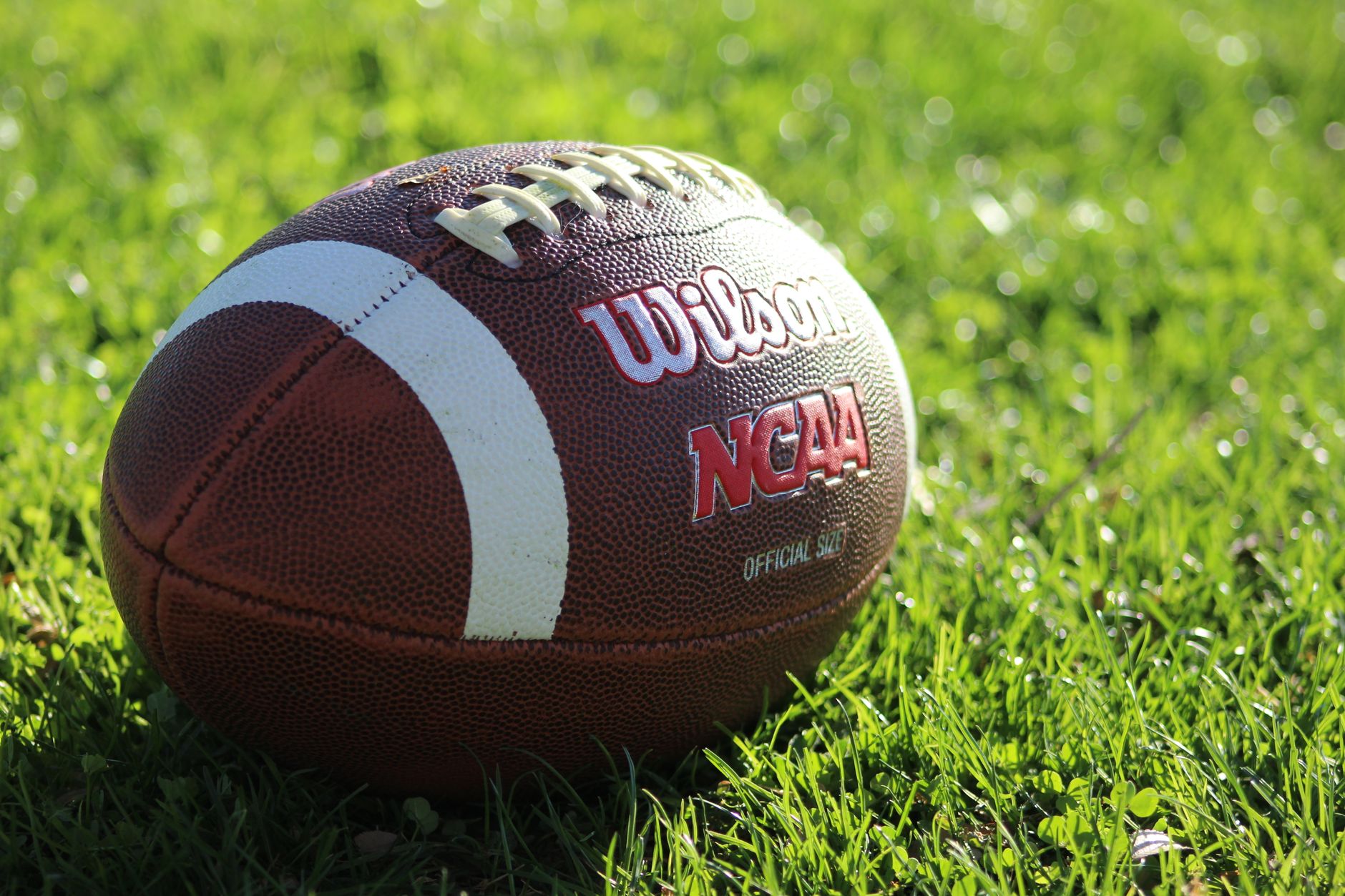
Photo by Jack Biddinger on Pexels
How should you read a college football schedule?
Read a schedule as a sequence of operational problems, not a list of opponents. Mark neutral-site games, long-distance travel, short weeks, rivalry games, conference openers, bye weeks, and stretches containing multiple ranked opponents. Then compare those demands with roster depth, because a deep team may absorb fatigue and injuries better than a talented but thin roster.
The practical checklist is:
- Identify whether the game is at home, away, or neutral.
- Calculate approximate travel distance and time-zone changes.
- Check whether the opponent had a bye week.
- Review the previous game’s physical intensity.
- Note whether the matchup occurs before or after a rivalry game.
- Confirm the venue and kickoff time through an official source.
- Compare the opening line with the current number, if wagering is relevant.
The Dublin example illustrates why source verification matters. A schedule page may display an attractive matchup and a betting line, but the line is not proof of a final market consensus, and a ticket price is not proof of availability. “Tickets as low as $32” or “line: TCU -6.5” should be treated as time-stamped information, not permanent facts. My own operational rule is to record the publication date, source URL, and last update before using any number in an article or decision.
Check the latest verified fixtures through this [Internal Link: 2026 college football schedule tracker] rather than relying on screenshots shared through social media.
Get the scheduling details before analyzing a matchup.
What about FCS teams, neutral sites, and major upsets?
FCS teams can defeat FBS opponents, but the probability and meaning of that result depend on roster quality, scholarship depth, coaching continuity, game location, and the FBS team’s motivation. Neutral-site games and international fixtures add further uncertainty because familiar routines, crowd composition, travel schedules, and field conditions may differ substantially from ordinary campus games.
Jacksonville State versus North Dakota State is a useful edge case because North Dakota State has long represented the competitive strength associated with the FCS level, while Jacksonville State has experience operating across changing competitive contexts. A simplistic model may classify the matchup as “higher subdivision versus lower subdivision” and stop there. A stronger model asks whether the FCS team has superior line play, whether the FBS program is replacing its quarterback, and whether the venue removes the expected home-field advantage.
Neutral-site games deserve separate treatment. North Carolina versus TCU at Aviva Stadium in Dublin is not equivalent to a normal home game in Chapel Hill or Fort Worth. Both teams must manage international travel, altered practice schedules, unfamiliar surroundings, and a different crowd balance. The first-quarter performance may be particularly informative, but even that signal should be handled cautiously because early-game mistakes can reflect travel disruption rather than true team quality.
The upset problem also exposes the danger of historical storytelling. A famous FCS win may remain in public memory for years, but past shock results do not establish a current probability. Use recent roster data, returning starters, transfer additions, efficiency statistics, and coaching changes. According to NCAA football information, current coverage emphasizes news, scores, statistics, rankings, championship history, and player developments rather than reputation alone.
What signals are most valuable before kickoff?
The most valuable pregame signals are usually quarterback availability, offensive-line continuity, defensive communication, and schedule-adjusted efficiency. Public excitement often focuses on Heisman candidates or highlight-reel receivers, yet the interior line can determine whether those stars receive enough time and space to influence the result.
Look for these specific indicators:
- A starting quarterback returning after limited practice.
- A team replacing both tackles against an aggressive pass rush.
- A defense allowing explosive plays on early downs.
- A large line move without an obvious public injury explanation.
- A favorite facing its third consecutive high-intensity opponent.
- A total that ignores wind, rain, heat, or an indoor venue.
- An FCS team with unusually high returning production.
A contrarian conclusion follows from this framework: the biggest upset edge is often not identifying the underdog, but identifying when the favorite’s depth is being overstated. If a team relies on a narrow group of starters and faces travel, injuries, and a short week, its theoretical superiority may not survive four quarters. That does not make the underdog an automatic wager. It means the expected margin should be reduced until the underlying conditions are verified.
Where does college football analysis fail?
College football analysis fails when it confuses rankings with probabilities, treats old statistics as current truth, ignores lineup news, or presents “official” betting information without a timestamp. It also fails when analysts convert uncertainty into confident language, particularly after a team has won several nationally televised games.
The first failure is ranking dependence. The Associated Press Top 25, Coaches Poll, CFP rankings, and computer models answer different questions at different points in the season. A preseason ranking may reflect recruiting momentum and prior success, whereas a late-season ranking incorporates actual results. Neither automatically tells you the correct spread for one specific matchup.
The second failure is small-sample overreaction. A quarterback throwing four touchdown passes against a weak secondary may receive excessive praise, while a poor game in heavy rain may be treated as evidence of permanent decline. A responsible assessment separates opponent quality, field position, garbage-time production, and turnover luck. It should also distinguish stable indicators, such as line efficiency, from volatile indicators, such as fumble recoveries.
The third failure is data freshness. During the 2026 cycle, NCAA coverage highlights developments involving Indiana, Miami, Oregon, Notre Dame, Ohio State, and individual award contenders. Those headlines are useful, but a news article about a player returning does not necessarily confirm his snap count, medical status, or role in the first game. The correct response is to use the story as a lead, then confirm the depth chart and coach comments through a primary school or conference source.
The fourth failure is financial framing. A prediction is not an investment guarantee, and a sportsbook price is not a neutral assessment of sporting truth. If you choose to wager, establish a fixed entertainment budget, avoid chasing losses, and confirm licensing requirements in your jurisdiction. Match Daily can provide sports-oriented analysis, but no publication can remove variance from college football.
To compare model inputs more carefully, use this [Internal Link: college football stats and matchup analysis hub].
Is live betting more accurate than pregame analysis?
Live betting is not automatically more accurate because in-game information arrives with faster markets, wider uncertainty, and greater emotional pressure. Pregame analysis can be more efficient when the bettor has verified injuries, weather, lineups, and matchup data before public reactions distort judgment.
Live markets do offer information that pregame models cannot fully know, including actual tempo, quarterback mobility, protection quality, and coaching adjustments. However, the market also updates quickly, and a viewer may see the same touchdown or turnover as every competing participant. The apparent edge can disappear before a decision is placed.
The operational risk is latency. Broadcast delay, commercial breaks, scoreboard errors, and incomplete injury reports can create a misleading sense of speed. A team that appears dominant after one explosive play may actually be benefiting from a broken coverage, while a team trailing by ten points may have generated better underlying efficiency. Data shows why single-event narratives are dangerous: football possessions are limited, so one turnover can materially change the score without proving a large difference in team ability.
A safer framework is to define conditions before the game begins. For example, decide that you will only reconsider a total if pace, red-zone access, and quarterback health differ from your original assumptions. Do not invent a new rationale after every play. This is where my scam-site experience still matters: a polished interface can make a rushed decision feel professional, but presentation is not evidence.
Should you try college football analysis today?
Yes, if you treat it as structured sports research rather than guaranteed prediction. Start with official schedules and injury information, separate FBS from FCS, evaluate travel and venue conditions, compare current prices with estimated probabilities, and record uncertainty instead of hiding it behind confident language.
A practical 2026 workflow can be completed in six steps:
- Confirm the fixture: Use NCAA, conference, school, or ESPN schedule information.
- Classify the matchup: Note FBS, FCS, conference, neutral-site, or international status.
- Check personnel: Verify quarterback, offensive line, defensive captain, and transfer changes.
- Measure context: Review rest, travel, weather, rivalry pressure, and schedule congestion.
- Compare value: Translate the available line into an implied probability and challenge your assumptions.
- Review afterward: Record what the model missed, including injuries, turnovers, and coaching adjustments.
The final step is where most casual analysts quit, which is precisely why it is valuable. Keep a spreadsheet containing date, source, prediction, line, confidence, major assumptions, and final result. After 20 or 30 tracked selections, you may discover that your strongest opinions were driven by team branding rather than measurable advantage. That is not failure; it is useful calibration.
The 2026 calendar provides enough variety to test the framework: early international games, conference races, ranked matchups, FCS-FBS meetings, bowl season, and the CFP. The CFP National Championship at Allegiant Stadium on January 25, 2027, gives the season a clear endpoint, but the analytical process begins much earlier. A championship race is a long sequence of decisions, not one dramatic final prediction.
For a broader sports-research perspective, see the [Internal Link: responsible match prediction methodology] and compare how the same probability principles apply across football competitions.
The best time to build a verified research routine is before the next kickoff.
Frequently Asked Questions
Q: What is college football?
A: College football is American gridiron football played by university-affiliated teams, primarily within NCAA competition in the United States. The highest-profile FBS programs include Alabama, Ohio State, Georgia, Oregon, USC, and Notre Dame, while FCS programs compete under a different subdivision and postseason structure. The sport combines athletic competition with campus identity, conference membership, recruiting, transfer movement, and bowl or playoff qualification. It is related to the NFL but is not a minor version of the professional league. Rules, schedules, roster construction, coaching incentives, and player development create distinct analytical conditions.
Q: How do I find the 2026 college football schedule?
A: Find the 2026 schedule through NCAA, conference, school, or established sports outlets such as ESPN, then verify the date, venue, kickoff time, and broadcast assignment. ESPN’s 2026 schedule groups games by weeks from August 22 through December and separates conferences including the ACC, Big Ten, Big 12, and SEC. Check again before traveling or wagering because kickoff times, television listings, ticket availability, and weather information can change. For international games such as North Carolina versus TCU in Dublin, also verify travel and venue details through the participating schools.
Q: What is the difference between FBS and FCS college football?
A: FBS and FCS are two NCAA football subdivisions with different competitive structures, scholarship models, schedules, and postseason systems. FBS contains many nationally prominent programs and forms the main pathway for College Football Playoff discussion, while FCS includes conferences such as the Big Sky, Ivy League, MVFC, Patriot League, and SWAC. FCS teams can defeat FBS opponents, especially when they have strong line play, veteran coaching, or favorable matchup conditions. However, subdivision labels alone cannot predict a result because roster depth, location, motivation, and quarterback availability also matter.
Q: Is college football betting worth it?
A: College football betting is only worth considering as paid entertainment when you understand probability, variance, legal requirements, and the risk of losing money. A strong team can still be poor value if the market price already reflects its advantages, and a large underdog can remain a bad wager despite having upset potential. Compare lines, verify injuries, set a fixed budget, and never chase losses after a disappointing result. If gambling affects finances, relationships, or daily behavior, stop and seek professional support rather than increasing stakes.
Q: Why do college football predictions fail?
A: Predictions fail when analysts rely on outdated rankings, ignore injuries, overreact to small samples, or confuse a team’s reputation with its current performance. Turnovers, weather, officiating, travel, quarterback health, and coaching adjustments can materially change a game that looked straightforward on paper. A useful review records the original assumptions and identifies which variable changed, instead of simply labeling the result “bad luck.” Tracking at least 20 to 30 predictions can reveal repeated weaknesses, such as overvaluing home-field advantage or underestimating FCS depth.
Q: How should beginners analyze a college football matchup?
A: Beginners should start with schedule verification, quarterback availability, offensive-line health, defensive efficiency, travel, weather, and the available market price. First classify the game as FBS, FCS, conference, neutral-site, or international, then compare both teams against similarly strong opponents. Avoid using rankings as the sole method because rankings can lag behind roster changes and coaching transitions. Write down a probability estimate before kickoff and review it afterward; this simple habit reduces hindsight bias and makes improvement measurable.
Q: What happens if college football schedule information is wrong?
A: If schedule information is wrong, stop using the page immediately and confirm the fixture through an official school, conference, NCAA, or reputable schedule provider. Common problems include altered kickoff times, outdated broadcast listings, inaccurate ticket prices, and copied betting lines presented as current information. Record the source date and compare at least two independent references before making travel or financial decisions. A visually professional website is not proof of accuracy, so verification should be treated as a mandatory step rather than an optional precaution.
College football remains most rewarding when enthusiasm is balanced with evidence. The 2026 season offers international matchups, conference battles, FBS and FCS contrasts, bowl games, and a CFP championship destination in Las Vegas, but none of those storylines removes uncertainty. Use official sources, measure context, question “guaranteed” claims, and protect your bankroll or entertainment budget. That approach may not produce a perfect prediction record, but it produces something more valuable: decisions that can be audited, improved, and trusted.
If you are ready to compare verified sports insights, start here.