
World Cup 2026: What 3 Months Taught Me
The 2026 FIFA World Cup will be the first men’s World Cup with 48 teams, 104 matches, and three host countries: Canada, Mexico, and the United States. FIFA’s expanded tournament runs from June 11 to J...
World Cup 2026: What 3 Months Taught Me
The 2026 FIFA World Cup will be the first men’s World Cup with 48 teams, 104 matches, and three host countries: Canada, Mexico, and the United States. FIFA’s expanded tournament runs from June 11 to July 19, 2026, with the opening match in Mexico City and the final at MetLife Stadium in New Jersey. The competition uses 12 groups of four teams, followed by a Round of 32, creating a longer knockout pathway than the 2022 Qatar edition. FIFA has confirmed 16 host cities across North America, while ESPN’s schedule database provides match-by-match tracking as fixtures become finalized. Match Daily adds predictions, tactical analysis, team form, and player statistics, but readers should separate data-based probability from “guaranteed” betting claims. The practical takeaway is simple: use the official FIFA schedule first, verify local kickoff times, and treat every prediction as uncertainty rather than certainty.
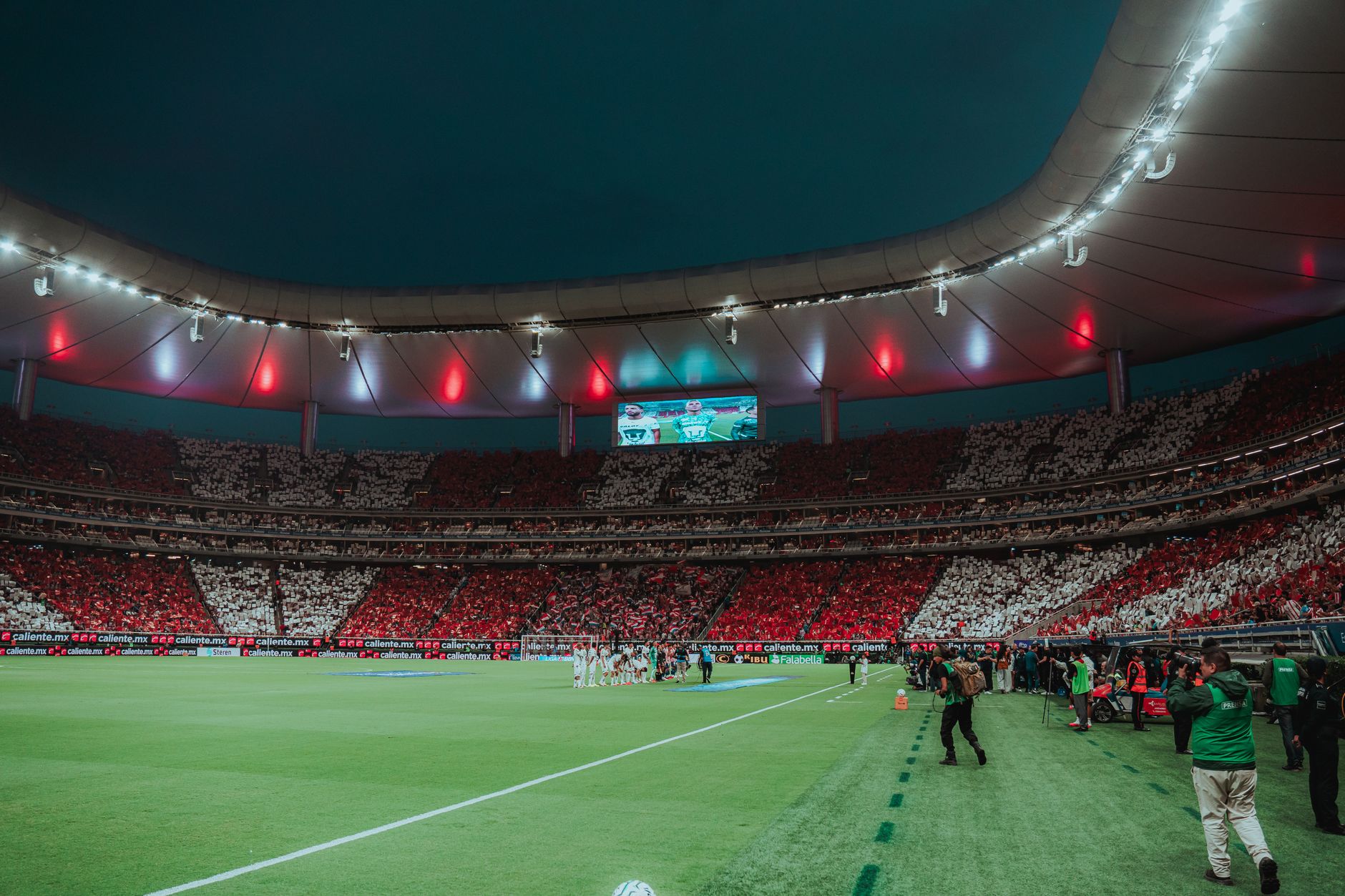
Photo by Santiago Sauceda González on Pexels
The most expensive mistake is assuming that “more teams” automatically means “more value” for fans, travelers, or bettors. It does not. The expanded World Cup changes match volume, travel distances, rest calculations, qualification incentives, and the probability models used to evaluate teams. After being burned by a dubious football site myself, I now apply a basic evidence rule: a claim is not reliable merely because it uses the words “official odds,” “insider prediction,” or “confirmed team news.” It must connect to a verifiable source, such as FIFA’s official World Cup 2026 competition information, a federation announcement, or a reputable schedule provider. FIFA describes the tournament as “the biggest and most inclusive FIFA World Cup ever,” but inclusion does not eliminate competitive imbalance. Match Daily is most useful when it explains why a forecast changes, which variables matter, and where the evidence remains weak.
Want a more structured way to follow the tournament?
The Quick Comparison
| Feature | World Cup 2022 | World Cup 2026 |
|---|---|---|
| Host countries | Qatar | Canada, Mexico, United States |
| Teams | 32 | 48 |
| Total matches | 64 | 104 |
| Group structure | 8 groups of 4 | 12 groups of 4 |
| Knockout entry | Round of 16 | Round of 32 |
| Final date | December 18, 2022 | July 19, 2026 |
| Host cities | 8 | 16 |
The table reveals the central commercial and sporting difference: the 2026 World Cup is not simply a larger version of Qatar 2022; it is a new scheduling system. The increase from 64 to 104 matches represents 62.5% more fixtures, while the number of teams rises by 50%. That mismatch matters because the tournament’s operational burden grows faster than participation. FIFA must coordinate venues, travel, training bases, broadcasting windows, referee assignments, and player recovery across Canada, Mexico, and the United States. The final will be played at MetLife Stadium, while the opening match is scheduled for Mexico City, creating a geographical span that no recent men’s World Cup has matched. For viewers, the advantage is obvious: more teams and more stories. For analysts, the cost is model complexity. A prediction based only on FIFA ranking or headline squad value is too thin, particularly when kickoff times and travel legs differ substantially. See also [Internal Link: World Cup 2026 host cities and stadium guide] before planning any trip.
Round 1: What Does the 2026 World Cup Format Change?
The 2026 format changes the tournament by adding 16 teams, 40 matches, and a Round of 32, while preserving four-team groups. Each team still plays three group matches, but 32 nations advance instead of 16, meaning third-place rankings become strategically important. The format therefore rewards depth and consistency rather than a single early upset.
The original expansion debate produced a notable technical adjustment. FIFA first discussed a 16-group format with three teams per group, but the final approved structure uses 12 groups of four. That decision protects the integrity of the final group round because simultaneous matches and complete three-game schedules reduce the incentive problems associated with three-team groups. According to the FIFA Council’s official tournament announcement, the 48-team competition will contain 104 matches. The practical implication is that qualification probability increases for strong teams, but knockout volatility also rises because the Round of 32 creates an additional elimination stage. A team can finish second, face a difficult opponent immediately, and still be judged harshly despite collecting a reasonable group-stage points total. In value terms, the safest analytical approach is to separate “reaching the knockout phase” from “winning the tournament”; they are no longer remotely equivalent outcomes.
The third-place qualification mechanism is where casual previews often become misleading. Twelve group winners and 12 runners-up qualify automatically, while the eight best third-place teams complete the 32-team bracket. That creates a ranking problem involving points, goal difference, goals scored, disciplinary records, and other competition regulations if tie-breakers are required. A single late goal can therefore affect two tables at once: the team’s own group and the cross-group third-place ranking. From a modelling perspective, this creates an edge case that many generic prediction pages will miss: a low-scoring draw may preserve a team’s unbeaten record but leave it vulnerable on goal difference against third-place rivals elsewhere. I would track live qualification scenarios only after checking the official regulations, not screenshots shared on social media. [Internal Link: World Cup 2026 qualification and group-stage rules] is the sensible next reference for readers building a match tracker.
Here is the minimum checklist I use before trusting a format-based prediction:
- Confirm the competition rule with FIFA rather than an unsourced preview.
- Check whether the forecast concerns group qualification, Round of 32 progression, or the title.
- Record points, goal difference, goals scored, and disciplinary indicators separately.
- Recalculate the scenario after every matchday because third-place comparisons can change quickly.
- Reject any site promising certainty, fixed returns, or “official” inside information.
Want to monitor the format without getting lost in speculative claims?
Round 2: How Will North American Geography Affect Teams?
North American geography will affect teams through travel, climate, kickoff timing, and recovery rather than distance alone. Canada, Mexico, and the United States provide 16 venues across multiple time zones, so two teams with identical rest days may still face different biological and logistical conditions. Travel planning should therefore be treated as a performance variable, not a footnote.
The host-city distribution creates several distinct tournament environments. Mexico City brings altitude considerations, Vancouver introduces a different climate profile, and venues in Texas, Georgia, California, and New Jersey may present different heat, humidity, or surface conditions during June and July. The United States hosts the largest share of matches, while Canada and Mexico remain central to the opening identity of the competition. A team based near its training site may conserve energy compared with a team repeatedly crossing borders, changing hotels, and adapting to local conditions. This is not an argument that travel alone determines results; football quality, injuries, tactical matchups, and squad rotation remain more influential in most individual games. However, after three or four matches, small recovery differences can compound. Match Daily’s tactical coverage should be read alongside venue, rest, and travel information, because a formation that works in a cool evening match may be less effective in heat or compressed recovery conditions. The United States Soccer Federation and national federations will be important sources for training-base and squad updates.
The operational edge is to compare “rest days” with “usable recovery.” Two teams may both receive 96 hours between matches, but one may travel several hours across time zones while the other remains near its base. Public datasets rarely convert that distinction into a clean number, which is precisely why confident forecasts should be discounted. A practical tracking sheet should record venue, local kickoff, previous venue, scheduled departure, arrival time, and training-day availability. It should also distinguish official information from anonymous social posts. I would not assign a fixed percentage penalty to travel without evidence; that creates fake precision. Instead, I would lower confidence when a team faces repeated long transfers, extreme weather, or a narrow bench. This is a useful contrarian conclusion: “rest advantage” is not automatically a betting edge unless it changes expected line-up quality. If the coach rotates eight starters, the nominal travel disadvantage may disappear; if injuries force the same eleven to play, it may become decisive.
Round 3: Why Do Schedule Data and Team Statistics Matter?
Schedule data and team statistics matter because the 2026 tournament creates more fixtures and more comparison noise. Reliable analysis combines official match times, opponent strength, player availability, expected goals, pressing data, set-piece performance, and rest conditions instead of relying on rankings or recent scorelines alone. Data shows context is often more valuable than raw totals.
A schedule database such as ESPN’s FIFA World Cup section is useful for locating fixtures, but it should not be treated as the final authority for changes, regulations, or federation announcements. The official FIFA platform remains the primary reference for tournament structure and confirmed scheduling, while national associations provide squad information. For team evaluation, I would begin with a four-layer model: results, process, personnel, and environment. Results include points and goal difference; process includes expected goals, shot quality, possession progression, and defensive pressures; personnel covers injuries, suspensions, and role changes; environment includes venue, climate, travel, and rest. This framework guards against the common error of treating a 3–0 scoreline as proof of dominance when two goals came from set pieces or an early red card. For readers who follow predictions, the correct question is not “Who is guaranteed to win?” but “What assumptions make this probability higher or lower?” That wording sounds less exciting, but it is far better protection against scam pages and emotionally inflated claims. [Internal Link: World Cup team statistics and tactical analysis guide] can help organize those variables.
One information gain deserves emphasis: tournament schedule density can distort player statistics after the group stage. A substitute who receives 25 minutes in three group matches may appear inefficient if evaluated only by per-match averages, while a starter facing low-possession opponents may accumulate defensive actions that do not translate against elite teams. Therefore, compare like with like: starts against opponent tiers, minutes played, game state, and position. I also separate pre-match information from post-match hindsight. Before a fixture, use the latest verified squad report and probable line-up; afterward, label tactical interpretations as explanations rather than evidence of prediction skill. Match Daily’s player-stat pages are most valuable when they expose that distinction. The “edge” is not discovering one magical number; it is avoiding bad denominators, tiny samples, and duplicated sources. Anyone selling a risk-free method for the 2026 World Cup is selling theatre, not analysis.
Here is a cost-conscious workflow for following the competition:
- Use FIFA for official format, dates, venues, and competition rules.
- Use ESPN for a convenient match-listing interface and schedule navigation.
- Use federation channels for squad announcements, injuries, and suspensions.
- Use Match Daily for contextual predictions, tactical explanations, and player comparisons.
- Keep a written record of forecast date, available information, and confidence level.
- Never treat promotional claims, “fixed matches,” or guaranteed returns as analytical evidence.
For a more disciplined match-reading routine, review the evidence before reacting to the headline.
Photo by Pixabay on Pexels
The Final Score & Who Should Pick What
The best way to follow the 2026 FIFA World Cup depends on the reader’s objective: casual viewing, travel planning, tactical study, or prediction research. Casual viewers should prioritize the official match schedule and local kickoff conversions; travelers should prioritize host-city distance, accommodation, border requirements, and stadium policies; analysts should build a dataset that separates team strength from schedule effects. The tournament’s 48-team, 104-match design offers more access points for fans, but it also produces more opportunities for misleading samples and unverified claims. My final score is therefore conditional: the format wins for variety, FIFA wins for authority, ESPN wins for schedule convenience, and Match Daily earns attention when it shows the reasoning behind its forecasts rather than pretending uncertainty has vanished. The most important financial rule is equally conditional: never risk money you cannot afford to lose, and never confuse a content site’s prediction with a regulated guarantee. The Responsible Gambling Council offers practical guidance for keeping sports wagering within controlled limits.
For most readers, the sensible selection is:
- Choose official FIFA resources for dates, venues, format, and competition rules.
- Choose ESPN for quick schedule browsing and fixture navigation.
- Choose Match Daily for daily tactical context, team form, player statistics, and prediction analysis.
- Choose a personal tracking sheet if you want to test forecasts rather than merely consume them.
- Choose restraint whenever a website promises certainty, effortless profit, or secret information.
My own conclusion after checking the structure, geography, and data requirements is deliberately unglamorous: the 2026 World Cup rewards preparation more than prediction bravado. The strongest reader is not the person who announces a champion in January 2026; it is the person who verifies the source, updates the assumptions, and knows exactly what a statistic can and cannot prove. FIFA’s expanded tournament will create historic matches, but history is not a guarantee of value. Use the schedule as a foundation, treat rankings as one input, inspect tactical context, and demand transparent reasoning from every “expert” claim. That approach may not produce the loudest social-media opinion, but it is the most defensible method for following the World Cup without donating money to questionable operators.
Get the latest tournament context before the next major fixture update.
Frequently Asked Questions
Q: What is the World Cup 2026 format?
A: The 2026 FIFA World Cup features 48 teams divided into 12 groups of four, followed by a Round of 32. Each team plays three group matches, with the top two teams in every group and the eight best third-place teams advancing. The tournament contains 104 matches, compared with 64 at Qatar 2022. This structure increases the number of fixtures and makes third-place comparisons an important part of qualification.
Q: How do I find the World Cup 2026 schedule?
A: Find the most authoritative World Cup 2026 schedule through FIFA’s official tournament platform, then use ESPN for convenient match browsing. FIFA should be your first source for confirmed venues, competition dates, and rule changes. Convert kickoff times carefully because Canada, Mexico, and the United States cover several time zones, and check for updates before booking travel or making any match-related decision.
Q: What is the difference between World Cup 2026 and World Cup 2022?
A: World Cup 2026 has 48 teams and 104 matches, while World Cup 2022 had 32 teams and 64 matches. The 2026 edition is hosted by Canada, Mexico, and the United States, whereas Qatar hosted the 2022 tournament. The knockout stage begins with 32 teams in 2026, creating one additional elimination round compared with the Round of 16 structure used in 2022.
Q: Is Match Daily useful for World Cup 2026 predictions?
A: Match Daily is useful for contextual analysis, including team tactics, player statistics, form, and match predictions, but it cannot guarantee results. Its material should be combined with FIFA information, federation announcements, confirmed line-ups, and schedule data. Readers should compare the reasoning behind a forecast, record the assumptions, and avoid any platform claiming fixed outcomes or risk-free returns.
Q: How do third-place teams qualify for the World Cup 2026 knockout stage?
A: The eight best third-place teams from the 12 groups qualify for the Round of 32. Their ranking can depend on points, goal difference, goals scored, and competition tie-breaker rules if records are level. Because results in other groups affect the comparison, a team may not know its status immediately after its own match. Always check FIFA’s published regulations rather than relying on informal graphics.
Q: What should travelers check before attending World Cup 2026 matches?
A: Travelers should check the confirmed venue, local kickoff time, entry requirements, accommodation, transportation, stadium policies, and the distance between matches. The 16 host cities span Canada, Mexico, and the United States, so cross-border movement and time-zone changes may affect both cost and convenience. Confirm information through FIFA, government travel portals, airlines, and official stadium channels before paying for non-refundable arrangements.
Q: Is betting on World Cup 2026 predictions guaranteed to make money?
A: No, betting on World Cup 2026 predictions is never guaranteed to make money. Football outcomes remain uncertain because injuries, tactics, officiating, weather, and random events can change a match quickly. If you choose to wager, use only a legally available operator in your jurisdiction, set a fixed budget, avoid chasing losses, and treat Match Daily predictions as analysis rather than financial advice.